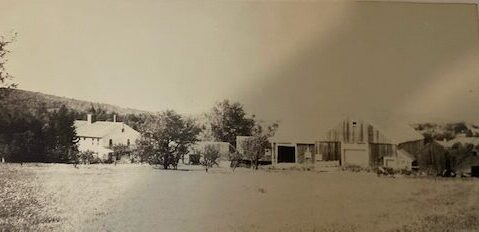
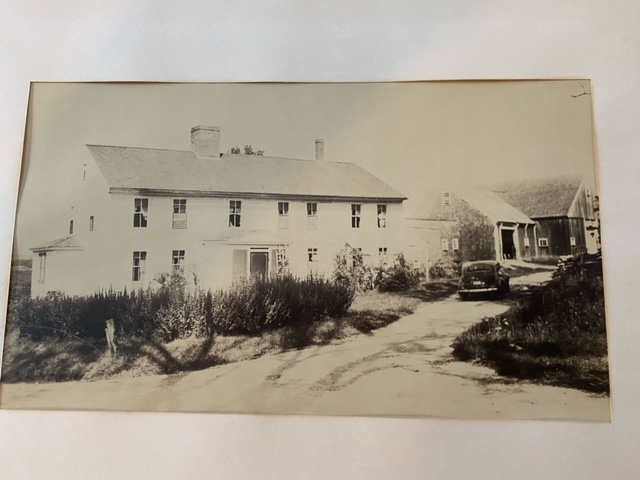
The carriage house is the building with the dark square door.
Photo taken September 17, 1945 by Grace R. Moulton Lord
After moving, restoring and renovating our 1805 Federal Era farmhouse, once part of a connected “big house, little house, back house, barn,” we couldn’t let the last standing piece of that classic New England structure fall. The carriage house, which still occupies its original position, was sandwiched between the barn and a row of back houses consisting of a tool shed, pig sty and a privy. The barn collapsed between 1960 and 1970 “for want of a nail” as poet Otta Chase put it. Once the roof was compromised, water got in and the wood beams rotted.
When our architects, Barba +Wheelock, came to admire their design work on our restored farmhouse last fall, it was a windy day. Cynthia Wheelock stood in the new living room looking out the windows and spied a corner of the carriage house’s metal roof lifting and falling like a luffing sail. Her eyebrows shot up. “Oh, that’s going to be trouble,” she said.
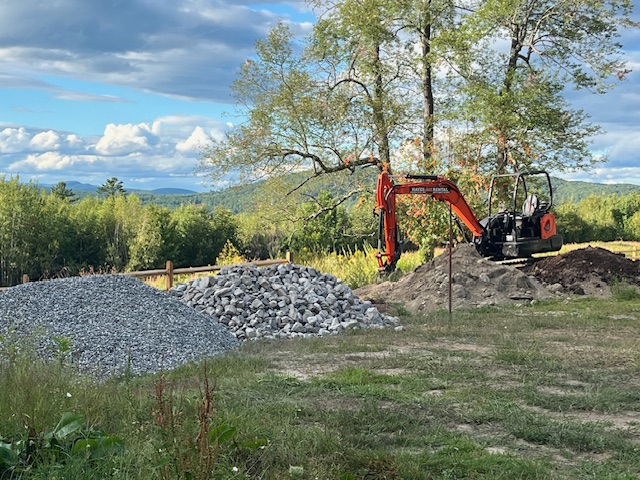
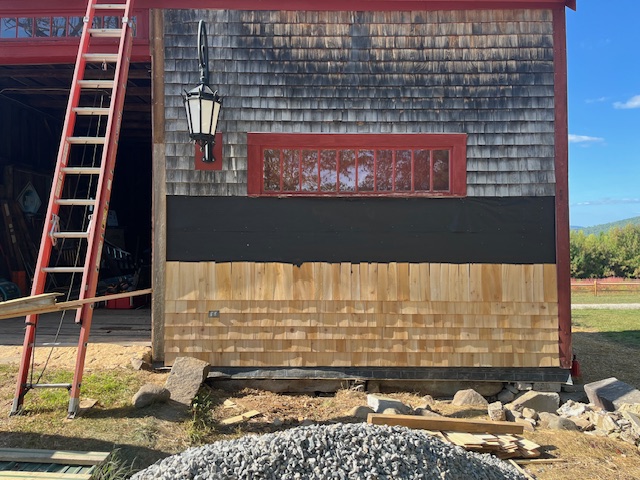
She was right. So this fall we hired the Barn Cats LLC, a small team of barn wrights to improve the drainage around the foundation, replace some aging shingles and the rusted metal roof. We’d seen the work they’ve done on other barns in the area and they gave us a surprisingly low estimate to complete the work. We were impressed when they showed up, put up their sign, and brought in heavy equipment and creative ideas for water management.
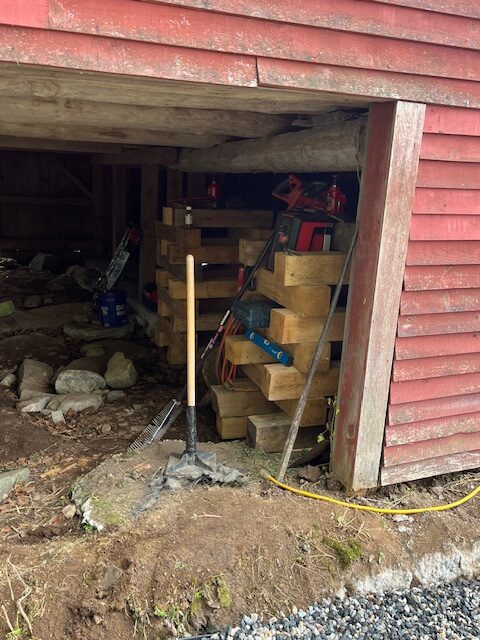
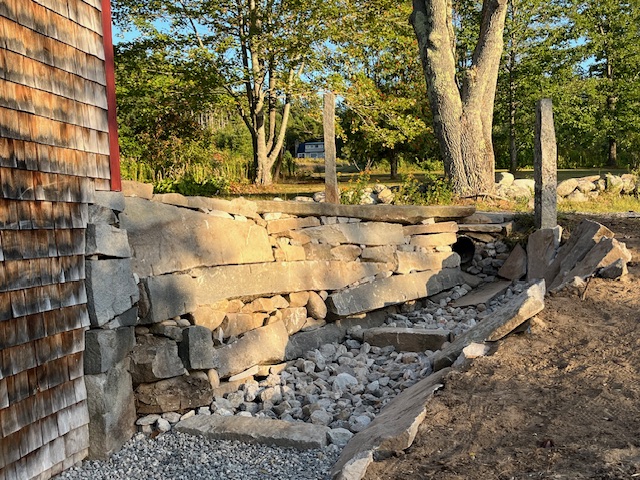
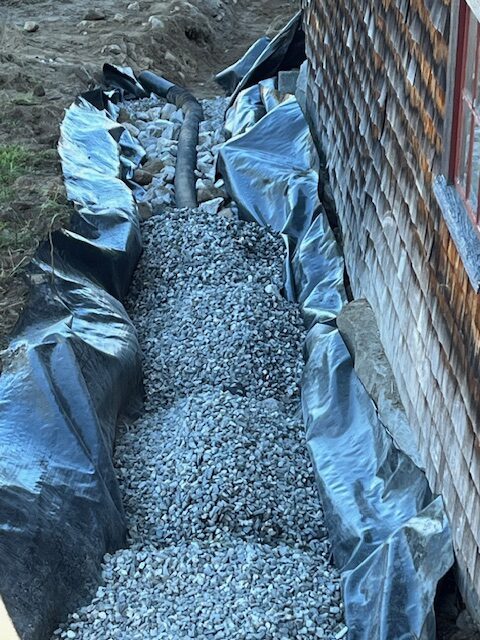
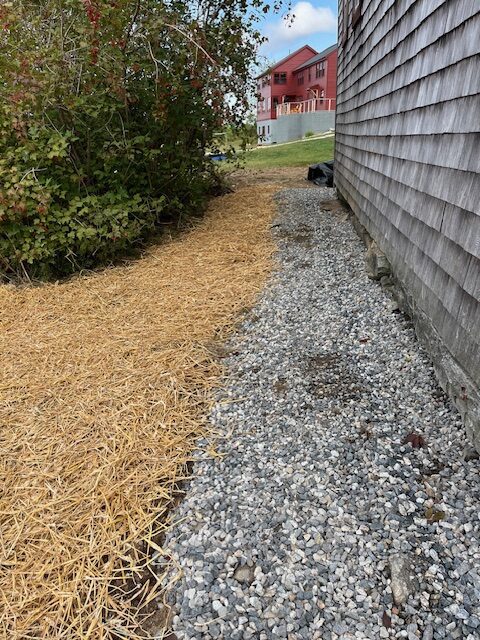
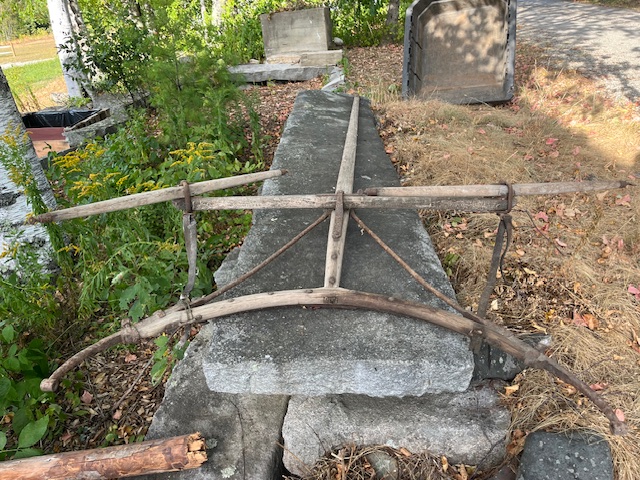
The crew found a number of historic items under the barn – two intact glass bottles, three metal spoons and handmade square nails. We unearthed a mysterious wooden pole with cross pieces and a remnant of a leather harness that looked like it had something to do with horses and plows. That theory was confirmed by a couple of farmers demonstrating draft horse skills at the Common Ground Fair!
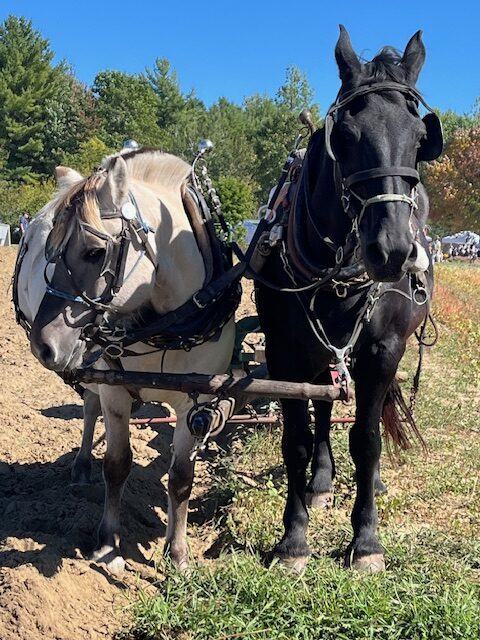
Creative touches with granite
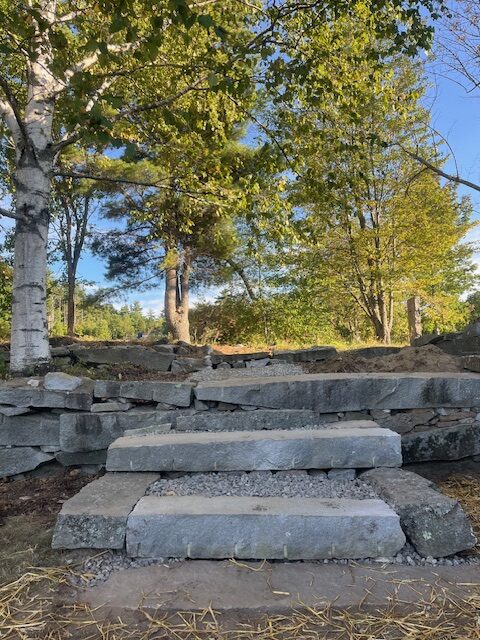
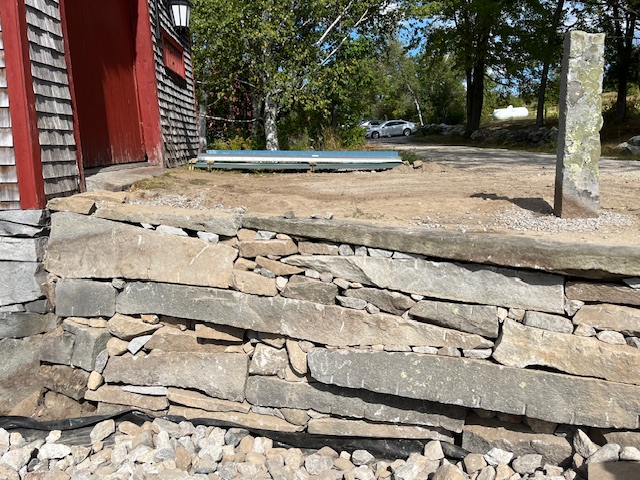
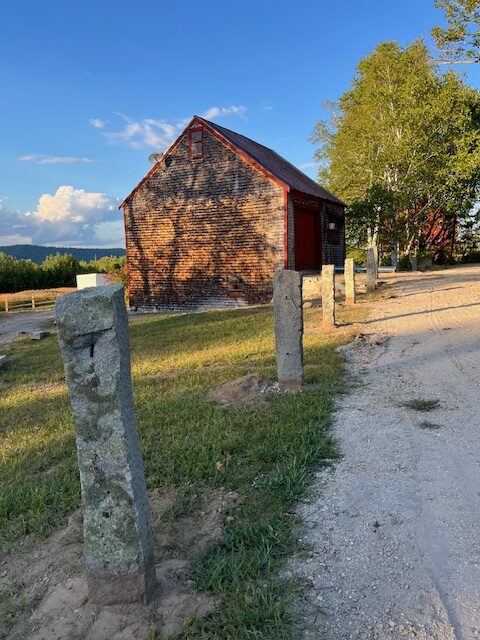
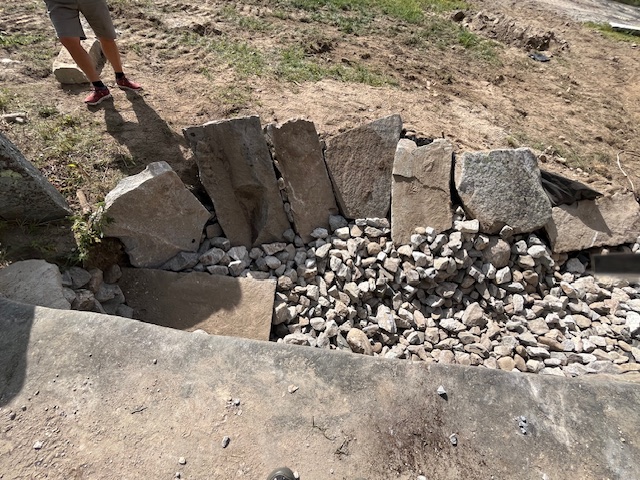
The Barn Cats made improvements on every level.
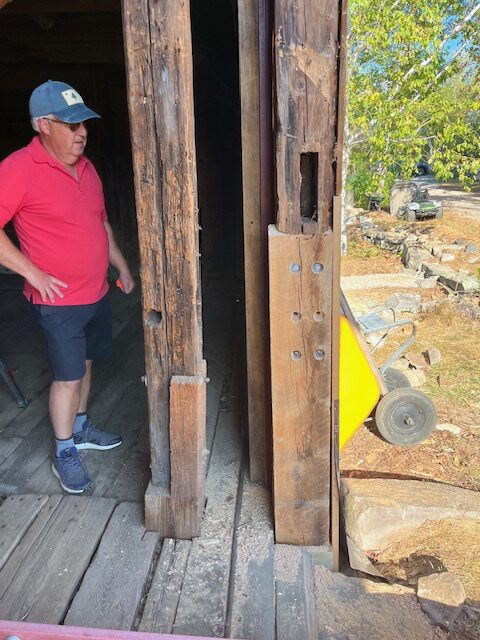
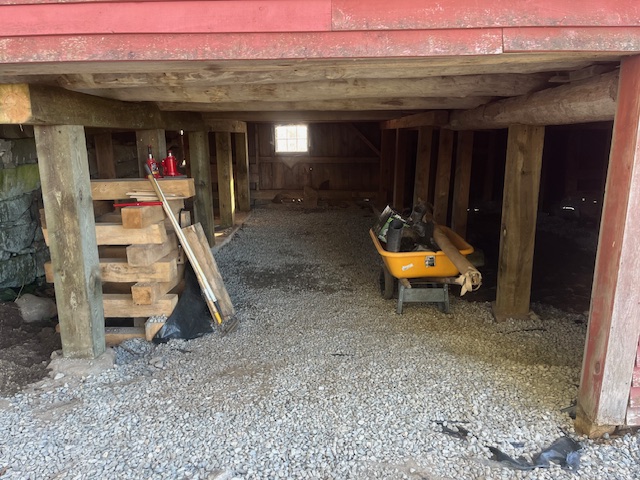
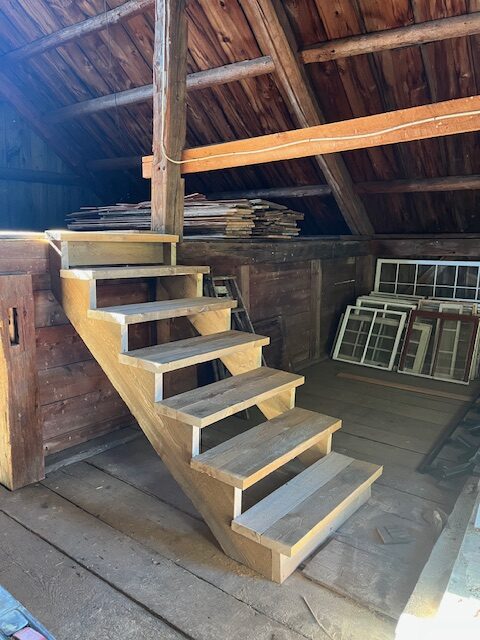
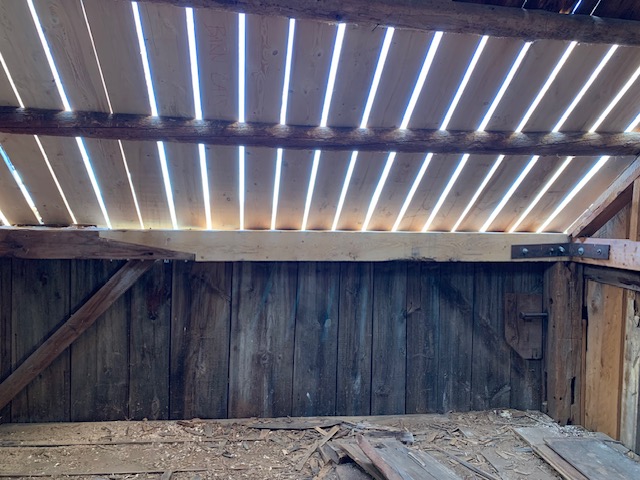
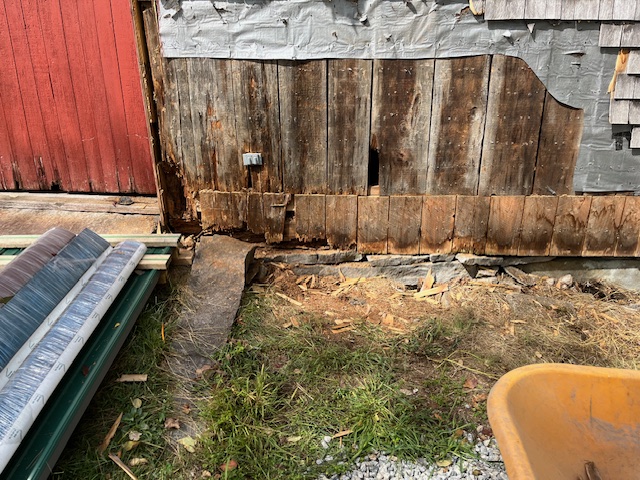
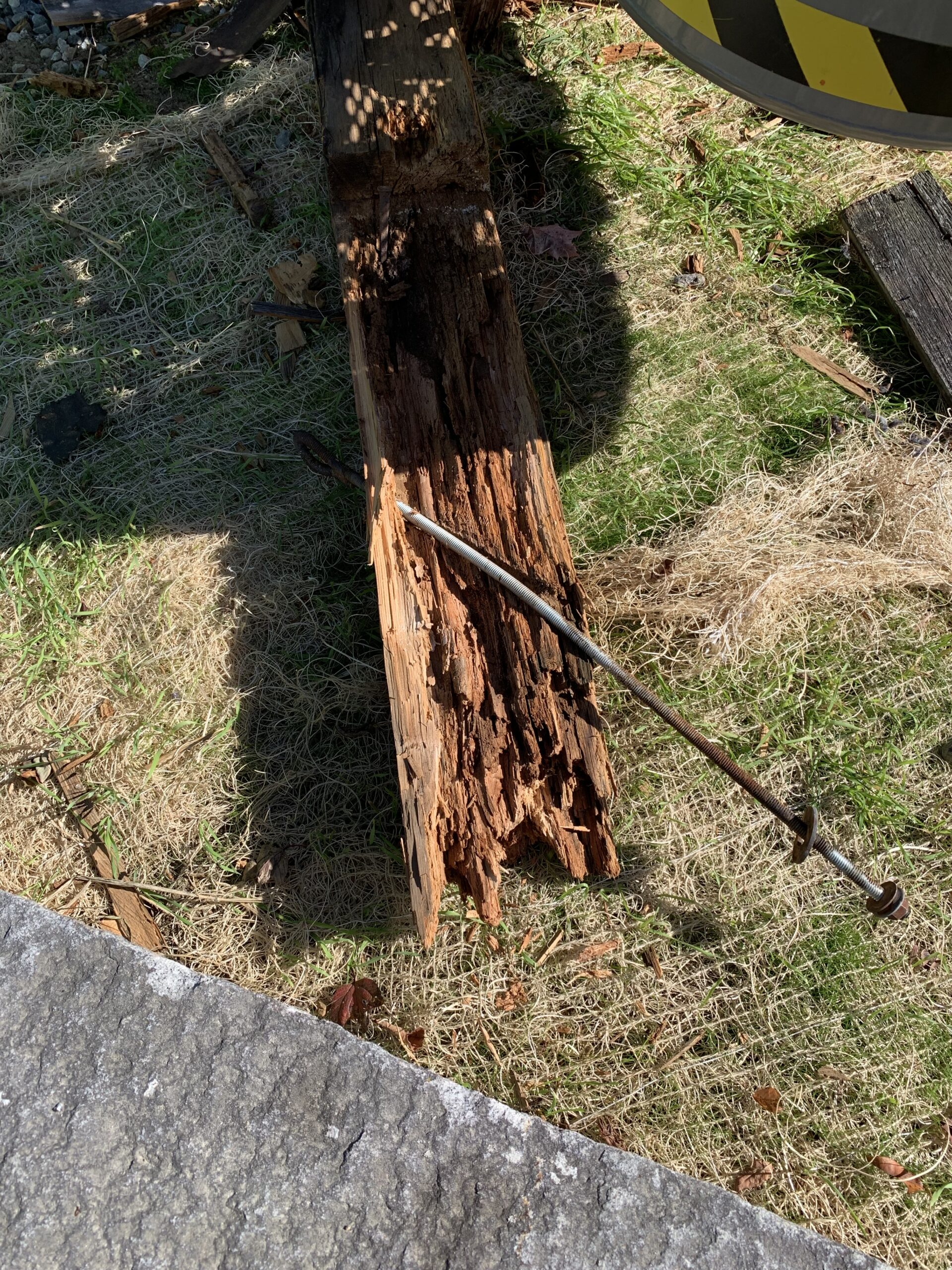
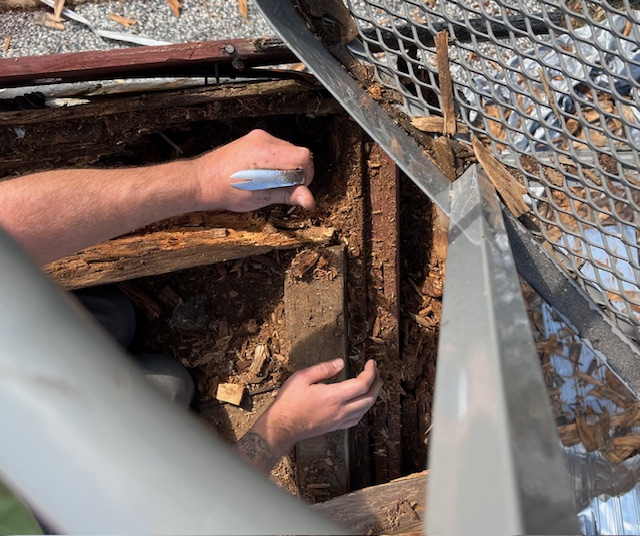
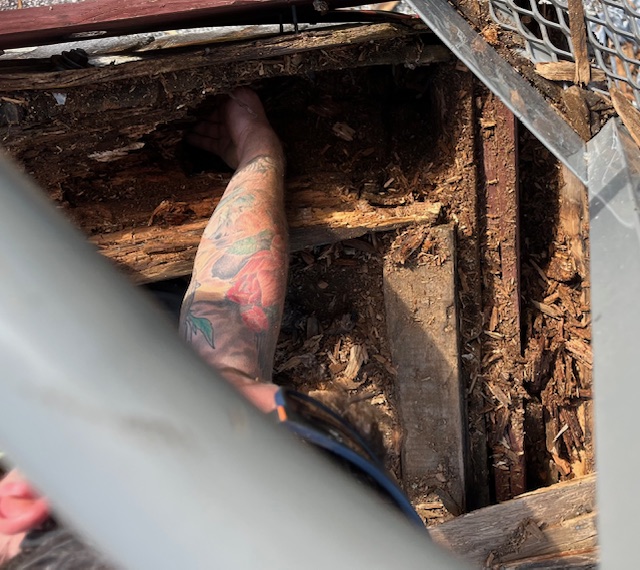
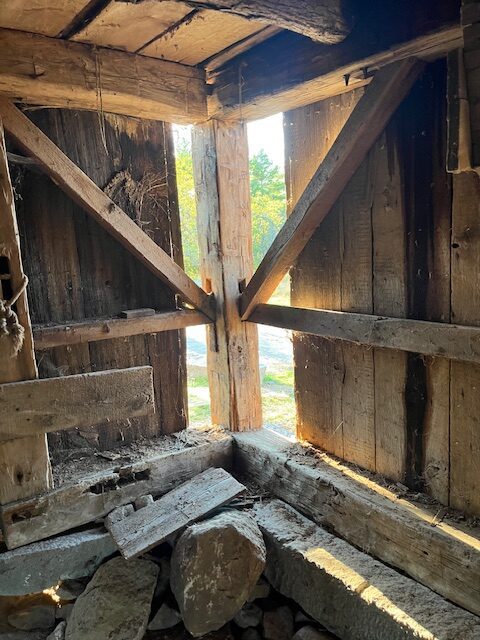
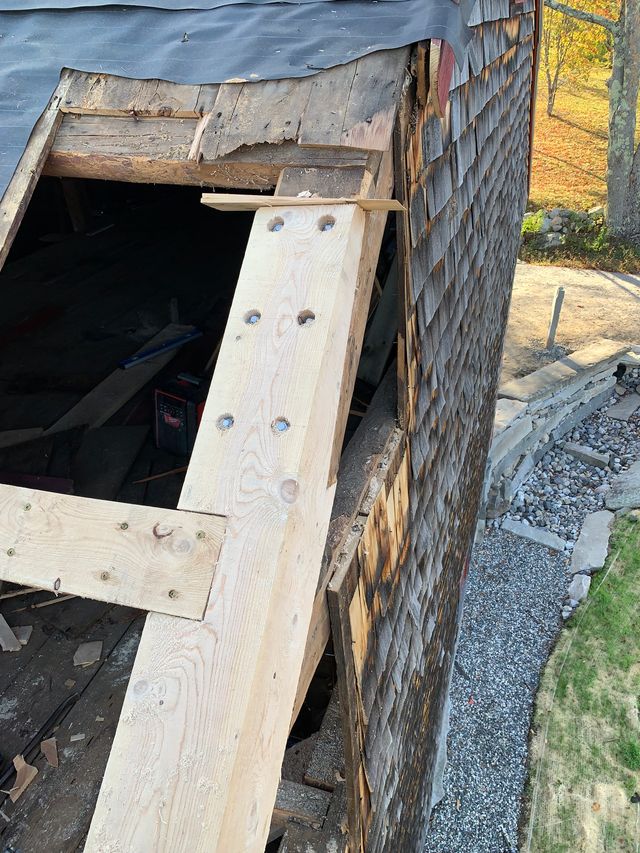
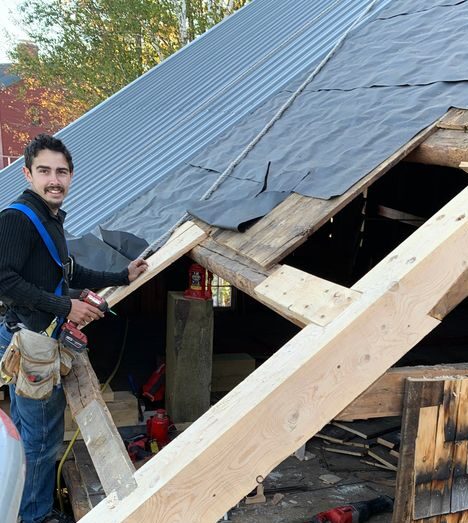
Everything was looking good and going to plan until the Barn Cats started removing shingles. The shingles and sill at the front of the building were rotten from years of snow piling up there and needed to be replaced. When they removed the metal roof, they exposed more rotten wood which they replaced using Japanese scarf joints to connect the old and new wood. And when they reached the Northwest corner where our architect had seen the roof flapping in the wind, it was really bad news. They had suspected that part of a rafter and connecting top plates would be rotten but not that the entire 22-foot corner post would be hollow. A red squirrel’s nest was lodged inside!
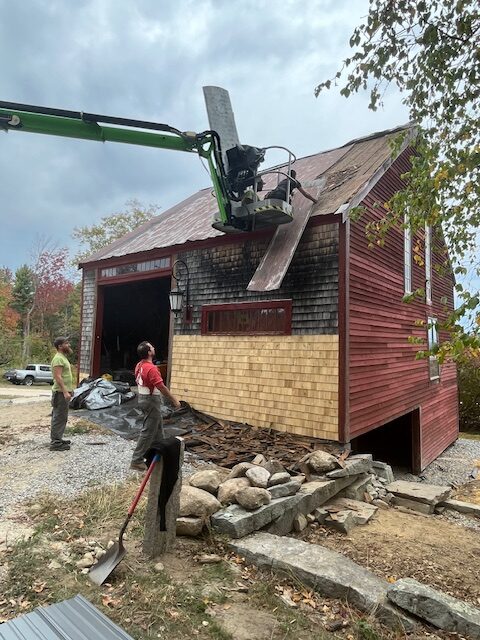
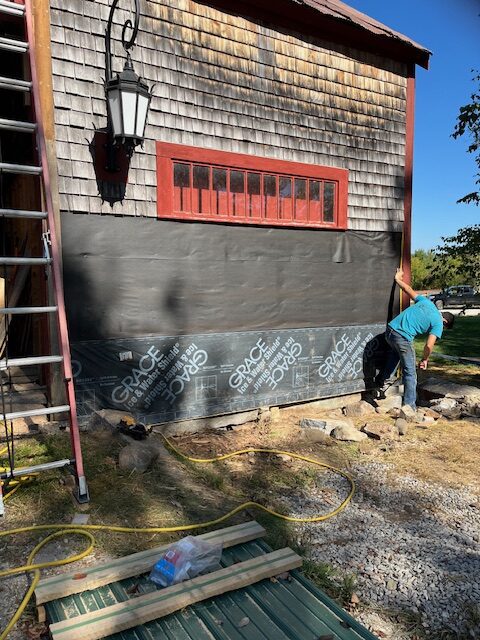
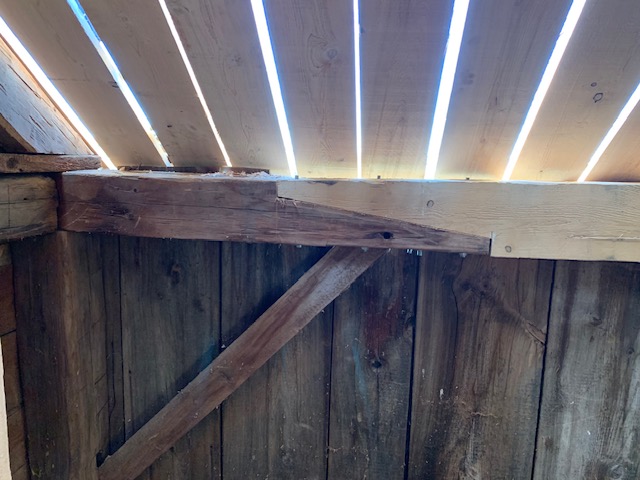
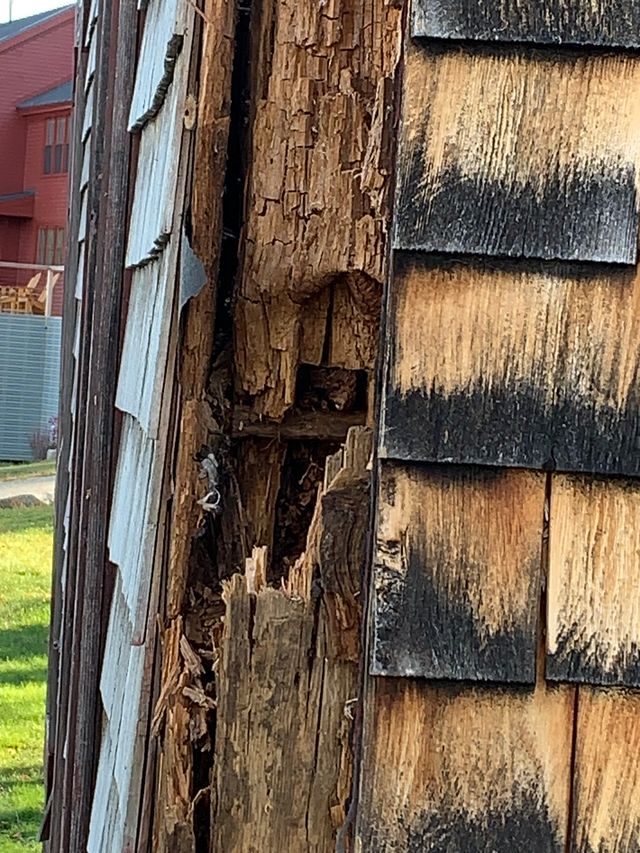
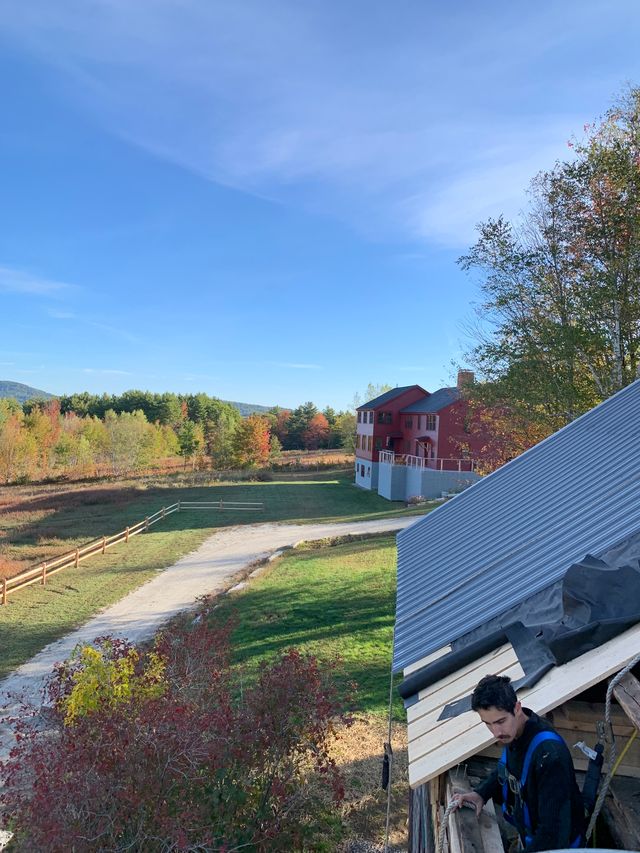
I got a ride in the lift used to access the roof so I could see the damage to the beams for myself.
The Northwest corner was completely rotten. It would take more time, more materials and more money to repair. Disappointing news, for sure, but better to know the truth.
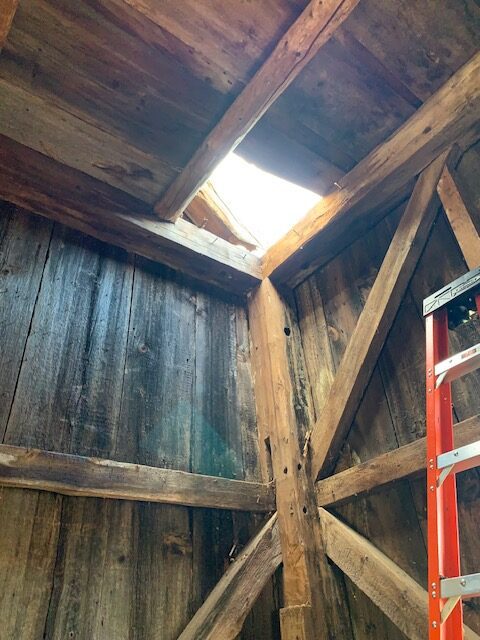
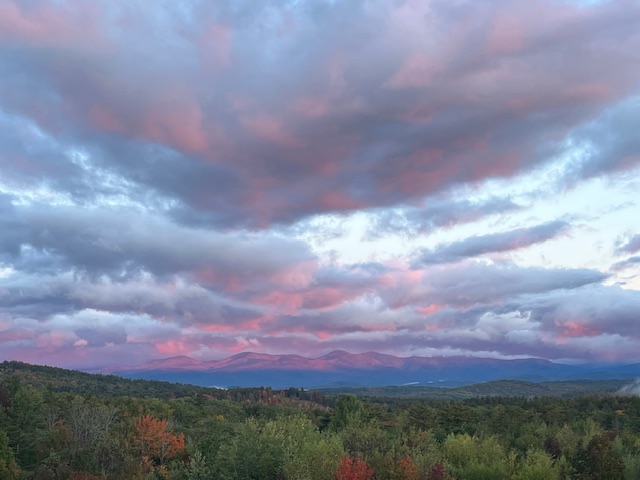
To keep things in perspective, I turned to look at the big picture. We had an amazing view!
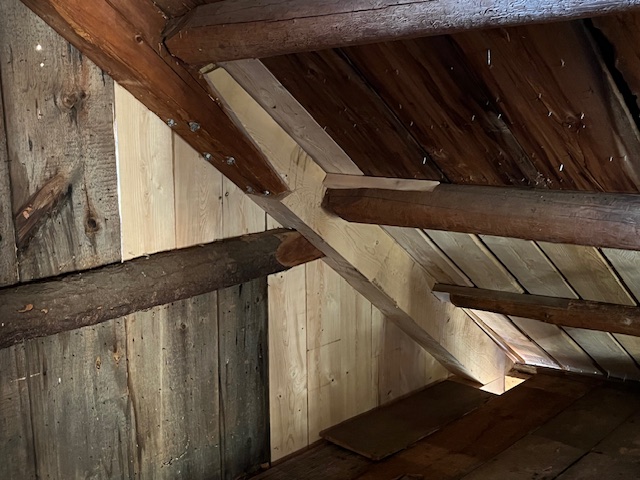
It’s taken an additional two weeks to replace that corner post and connect it to the rest of the structure while keeping everything supported. Not an easy job.
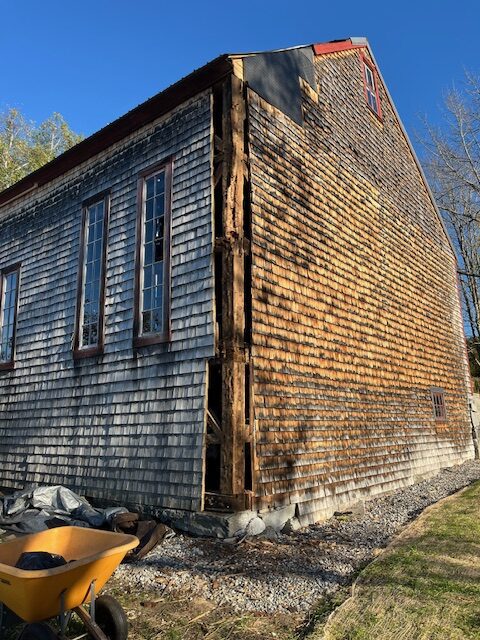
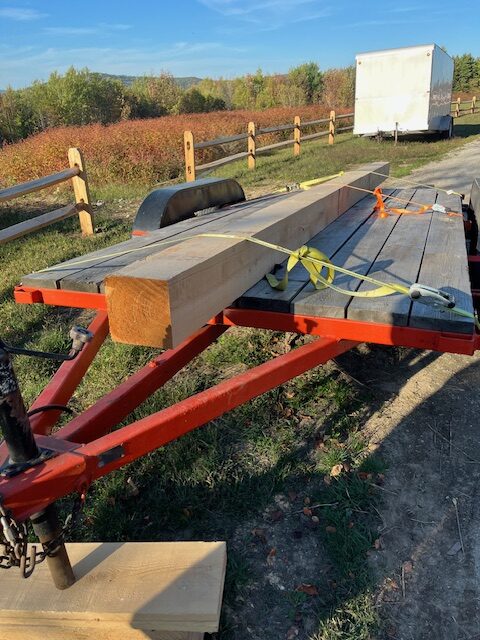
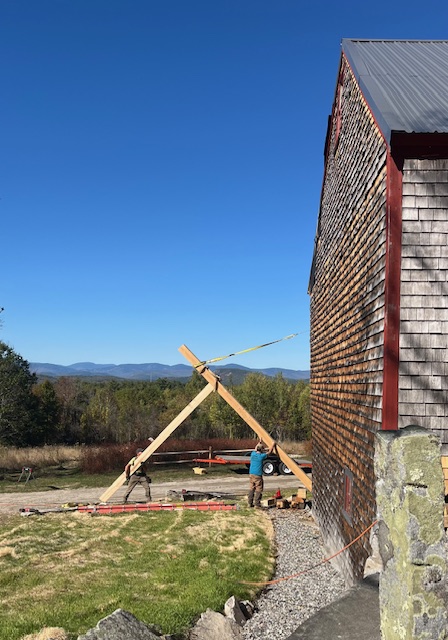
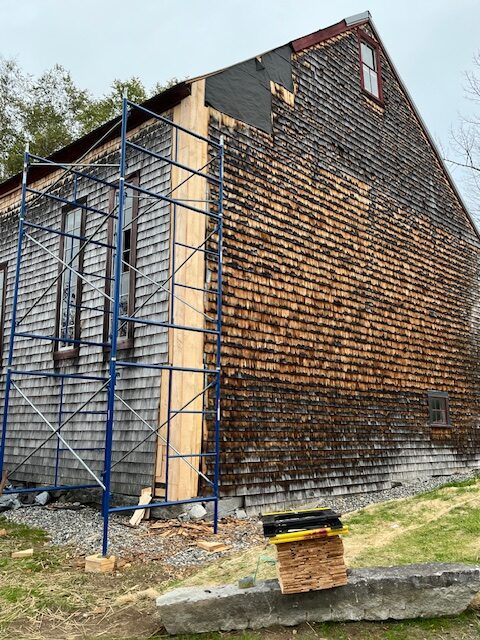
It turned out that the beams’ tenons – the part of the beam that is supposed to fit into the post – were also rotten so the Barn Cats had to come up with another way to attach them. They fabricated steel braces to screw into the new pressure treated wood.
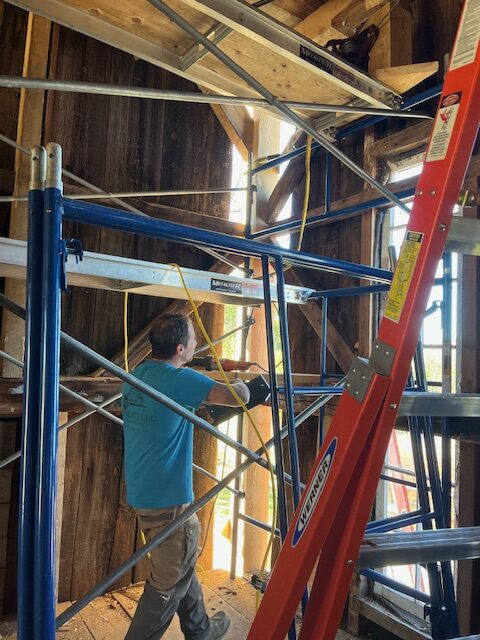
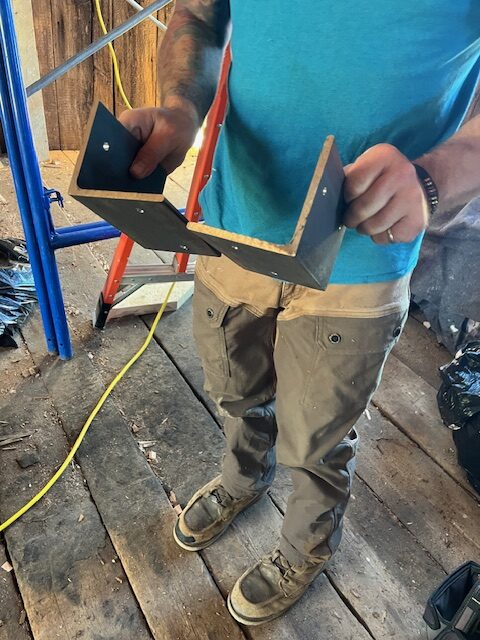
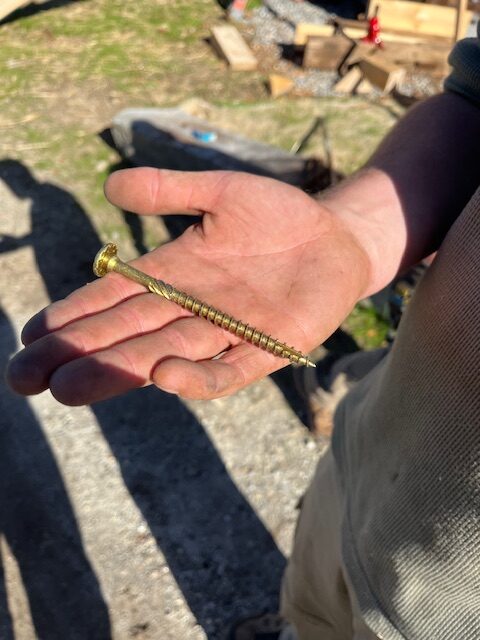
We had no idea how much work this little barn project would entail. Hard to believe now that my original aspiration was to replace a few shingles and get the satellite dish off the gable end. Tick. Now we have a 200-year-old carriage house that will stand for another century. The Barn Cats’s work will keep the structure safe and dry.
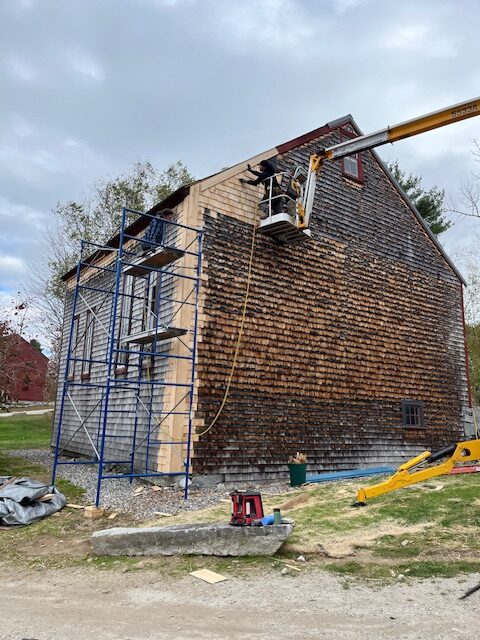
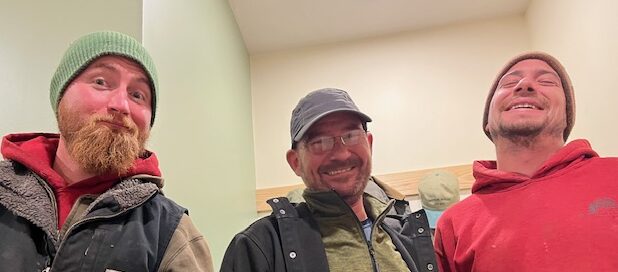
Job well done!
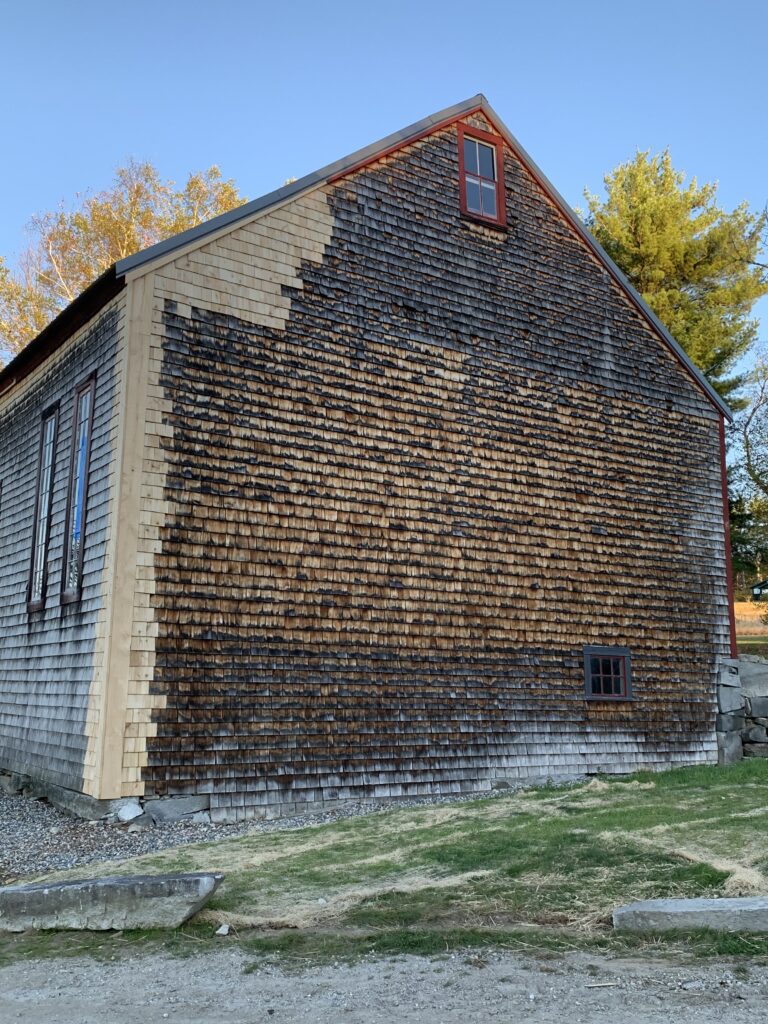
Wow! Another job well done. Just in time for winter!